Case Study: Bringing a Low, Downturned Nipple Back to a Natural Height

When a breast reduction is done well, it does two jobs at once. It takes away the weight that has been pulling on a woman’s body for years. It also brings the nipple back to where the eye expects it to be, high on the breast and pointing forward. This patient came to us needing both.
Her breasts had grown heavy and dropped low over time, and her nipples had drifted down along with them. At 47 years old and standing 5 feet 3 inches tall, she carried more breast tissue than her frame was built to support. The plan was to lighten that load and rebuild the shape from the ground up.
What the Weight Was Doing
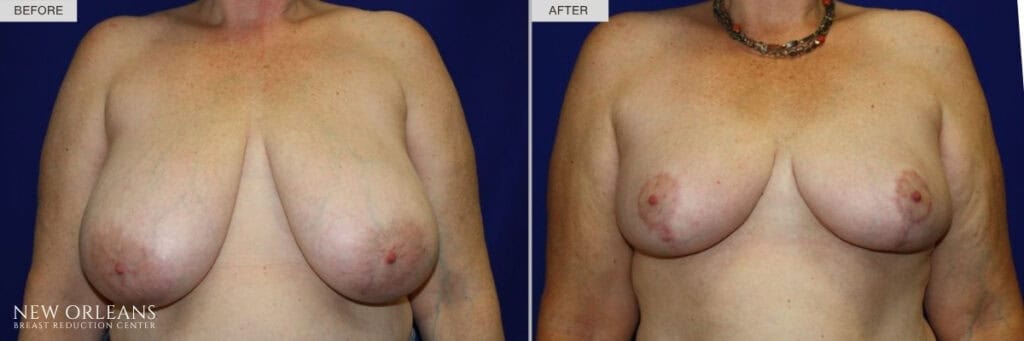
Before surgery, her breasts hung low and full against her chest. Tissue this heavy does not just sit there. It pulls on the shoulders, strains the upper back, and drags the whole breast mound downward year after year. At 185 pounds on a shorter frame, the size was out of proportion with the rest of her body.
We removed 574 grams from the left breast and 626 grams from the right. That is more than 1,200 grams total, or roughly two and a half pounds of tissue. Taking that much weight off does more than change how she looks. It eases the daily physical strain that large breasts place on the neck, back, and shoulders. For many women, that relief is the first thing they notice after surgery.
A Nipple That Had Drifted Low
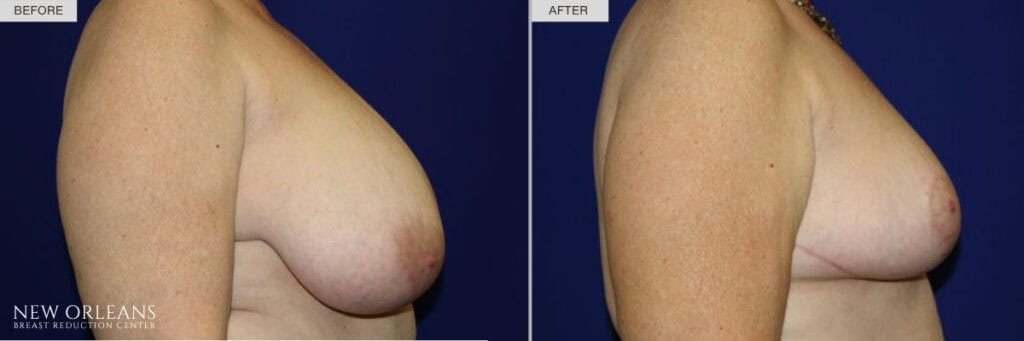
The extra weight left a clear mark on nipple position. From the front, both nipples sat well below the crease under each breast. From the side, they pointed down toward the floor rather than out. This is a classic sign of advanced sagging, which doctors call ptosis. Since heavy tissue had pulled the skin and nipple down for years, the entire mound had fallen low on the chest wall.
A downturned nipple tells us how far the skin has stretched and how much the tissue has dropped. It also tells us how far the nipple needs to travel to make the breast look balanced again. Reducing the size alone would not fix this. We had to move the nipple up as part of the same operation.
Moving the Nipple Without Cutting It Free
A common worry is whether the nipple gets removed and sewn back on. For this patient, it did not. We kept the nipple attached to a stalk of living tissue called a pedicle. That stalk carries the blood supply and nerve connections the nipple needs. It keeps the nipple alive and, in many cases, helps preserve feeling and the ability to breastfeed later.
We lifted the nipple to its new position while it stayed connected the whole time. The distance here was significant. Since her nipple started so low, we raised it several centimeters to reach a natural height. The reshaped, lighter breast tissue was then built up beneath it. The nipple now sits at the fullest, most forward point of each breast. This is the step that turns a smaller breast into a natural-looking one.
Two Sides That Needed Different Plans
The 52 gram difference between the sides was not random. The right breast was larger and lower before surgery, so we removed more tissue from it. We treat each breast as its own project rather than doing the same thing twice.
We aim to match size, but we also match nipple height, breast shape, and the level of the crease underneath. A woman does not study one breast at a time. She sees both together in the mirror. That is why we plan for balance from the start instead of hoping it evens out. Correcting a side-to-side difference like this takes measurement before surgery and careful checking during it.
Reshaping the Skin Envelope
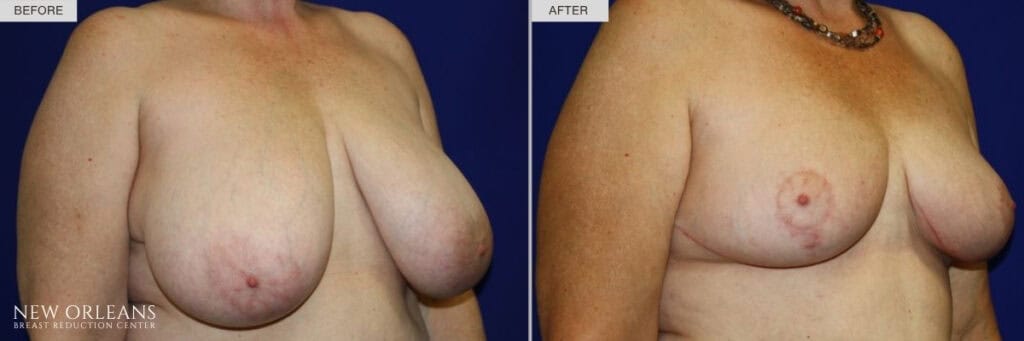
Once the extra tissue is out, loose skin is left behind. That skin has to be tightened and reshaped so the smaller breast holds its new, lifted form. We used an anchor-shaped incision for this patient. That pattern runs around the areola, straight down to the crease, and along the crease itself.
The anchor pattern gives us the most control when a breast has this much extra skin and this much drop. It lets us tighten the skin from several directions at once. It also settles the nipple into its raised spot without tension pulling it back down.
The Result at Two Months
At two months after surgery, the change is easy to see. The breasts are lighter, smaller, and lifted, and they sit in far better proportion with her shorter frame. The nipples now rest high on each mound and point forward. The two sides are much closer in size and level than they were before.
The anchor-shaped scars are still pink at this stage. That color is normal so soon after surgery and fades over the months ahead. Fresh scars look their most obvious in the early weeks and grow softer and flatter with time. The size, shape, and nipple position, though, are already set.
Wondering If a Reduction Like This Is Right for You?
If your breasts feel too heavy for your frame and your nipples point down or sit low, a breast reduction can address both at once. It removes the weight straining your body and brings the nipple back to a natural, forward-facing height. Every breast is different, and so is every plan. Contact the New Orleans Breast Reduction Center to schedule a consultation. We will look at your goals and walk you through what is possible for you.