Case Study: What a Reduction Looks Like Seven Months Later

A breast reduction result is not finished on the day of surgery. The shape you see in the first few weeks is not the shape you keep. Tissue settles, swelling fades, and scars change color over many months.
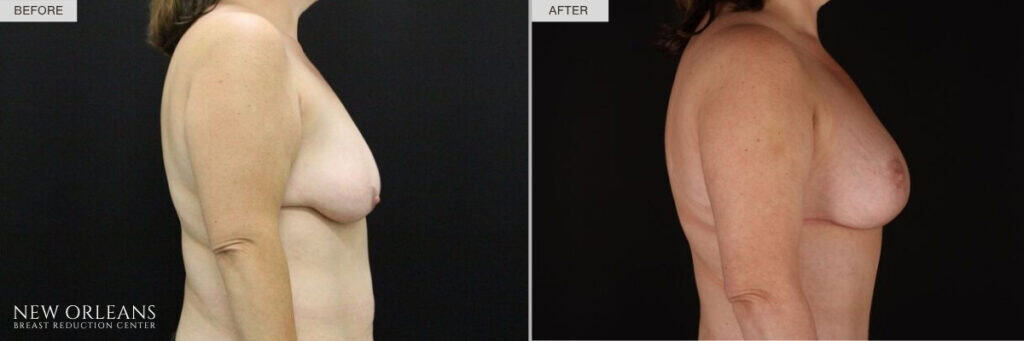
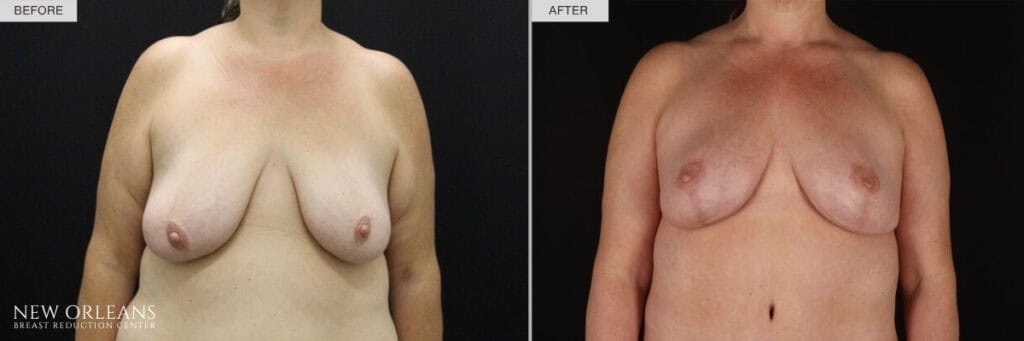
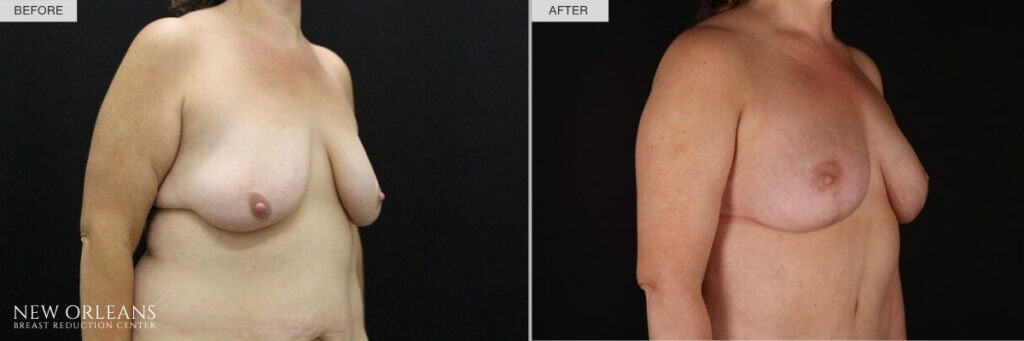
This patient was 43 years old, 5 feet 5 inches tall, and 175 pounds. Her after photos were taken seven months out, far enough along to show what a reduction really looks like once the early healing is behind it. That timeline is what makes her case worth walking through.
Where This Patient Started
Before surgery, her breasts sat low on her chest and had lost their shape. The fullness had drained out of the upper part of each breast and collected at the bottom. From the side, the breast tissue drooped past the crease with a flat, emptied look along the top.
Her nipples pointed down and slightly outward. This is the pattern we see when breast tissue and skin have both stretched over time. The volume was still there. It had simply fallen to the wrong place.
The First Few Weeks Look Different Than the Final Result
Right after a reduction, breasts almost always sit higher and firmer than they will later. Swelling fills the tissue and the skin is tight from surgery. Many women look in the mirror at two weeks and think the breasts look too high or too square.
That stage is temporary. Swelling comes down over the first six to eight weeks, and the breast begins to soften. We tell patients not to judge their shape during this window. What they see early on is a breast that has not settled into its permanent form yet.
How the Breast Settles Into Its Final Shape
Over the following months, the reshaped tissue relaxes and finds its natural position. Surgeons often call this settling. The breast drops slightly, the lower portion fills out, and the hard edges soften into a rounder curve.
This is why the seven-month photos matter for this patient. Her breasts now show a smooth, rounded contour with real fullness returned to the upper part. That roundness is not something we could have shown at two weeks. It arrived over time as the tissue relaxed into place.
What Scars Do Over the First Year
Scars follow their own timeline, and it is a longer one. For the first several weeks, they look pink or red and feel firm. That color comes from the extra blood flow that healing tissue needs, not from anything going wrong.
Between three and six months, most scars begin to flatten and lose that bright color. By seven months, they usually look considerably lighter than they did early on. The fading keeps going for a full year or more, so even a good-looking scar at this stage has more improvement ahead of it. We ask patients to protect their scars from the sun during this whole period, since sun exposure can lock in darker color.
The Result at Seven Months
At seven months, the breasts sit higher on her chest and hold a rounder, fuller shape. The upper portion no longer looks emptied out. From the side, the breast projects forward instead of hanging down, and the nipple faces forward rather than toward the floor.
The scars have had time to fade and blend. This is what a mature reduction result looks like, and it is a fairer picture of the surgery than any early photo would be. What she sees now is close to what she keeps.
Curious What Your Timeline Would Look Like?
Recovery from a breast reduction is a process, not a single moment. The breasts you see at two weeks, at two months, and at seven months are three different views of the same surgery. Knowing that ahead of time makes the early stages far easier to sit with.
Contact the New Orleans Breast Reduction Center to schedule a consultation. We will walk you through what to expect at each stage of healing and what your own result could look like once everything has settled.